Hamptons Fine Art Fair, 2026
Exhibition Theme :
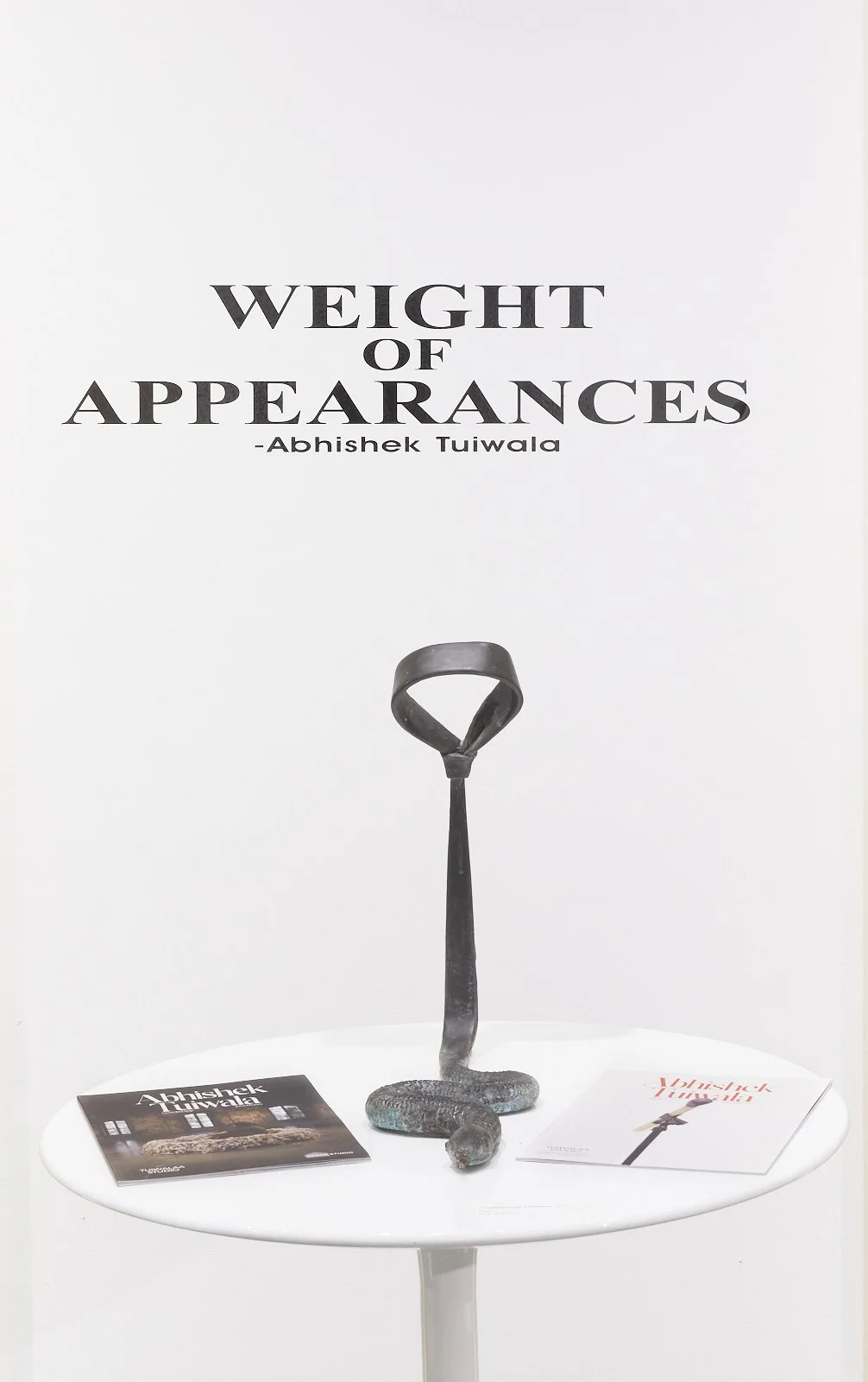
Abhishek Tuiwala's practice begins with a need to construct perspective. Making art is not a neutral choice but an urgency, a way to think through conditions that otherwise remain unarticulated. Humor and satire are central to this process, allowing him to approach familiar systems from oblique angles and expose contradictions embedded within structures of labor, family, and social expectation.
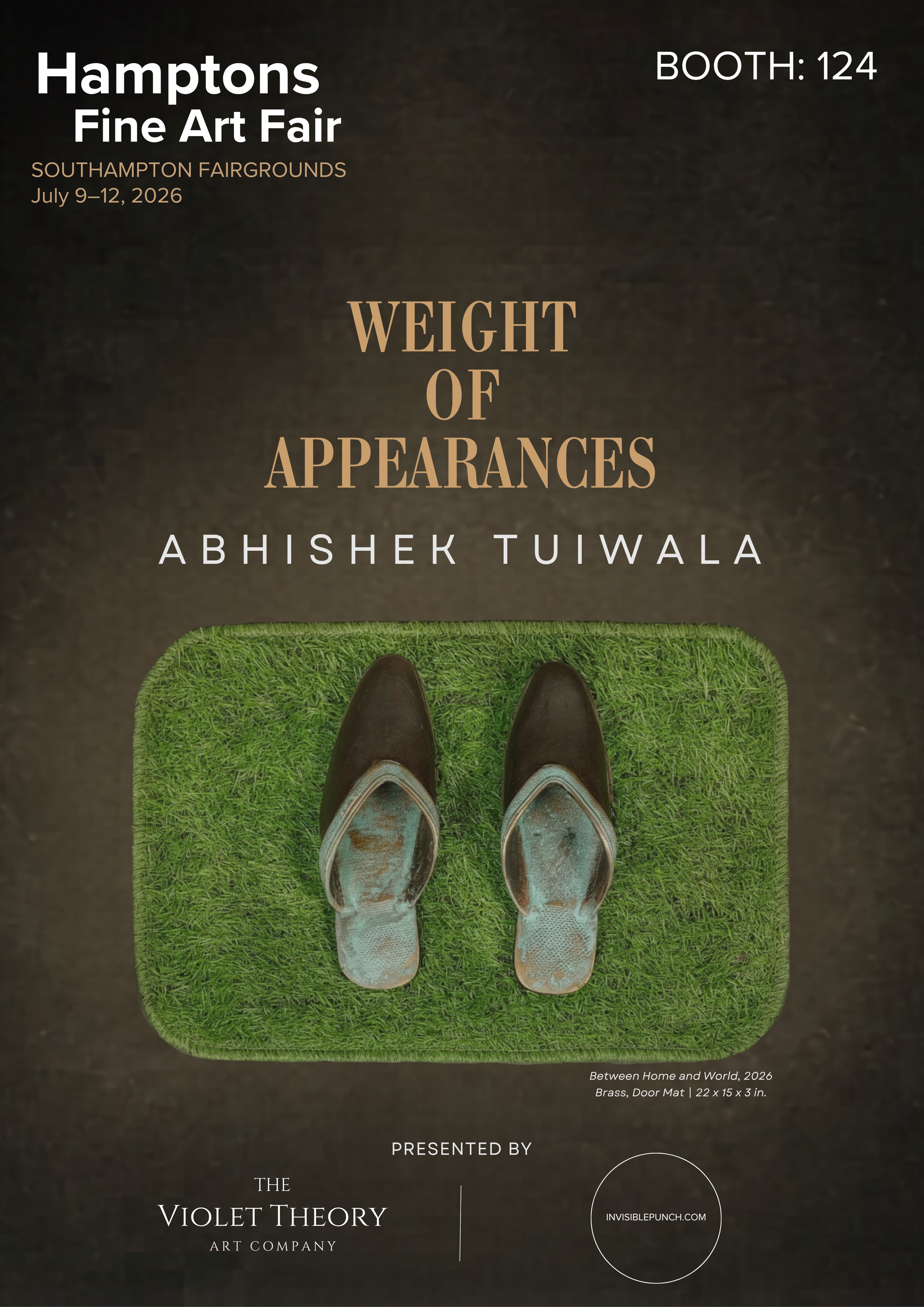
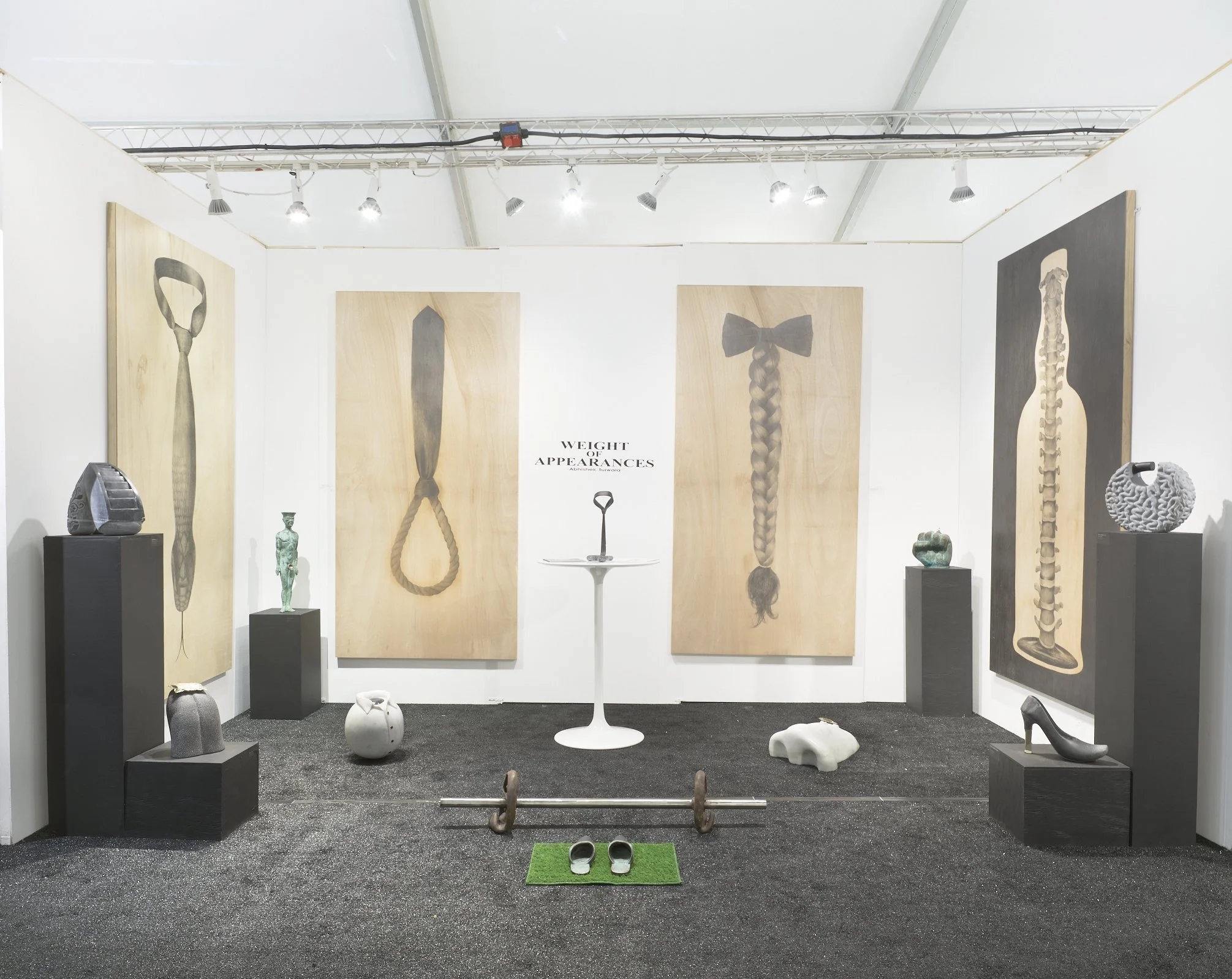
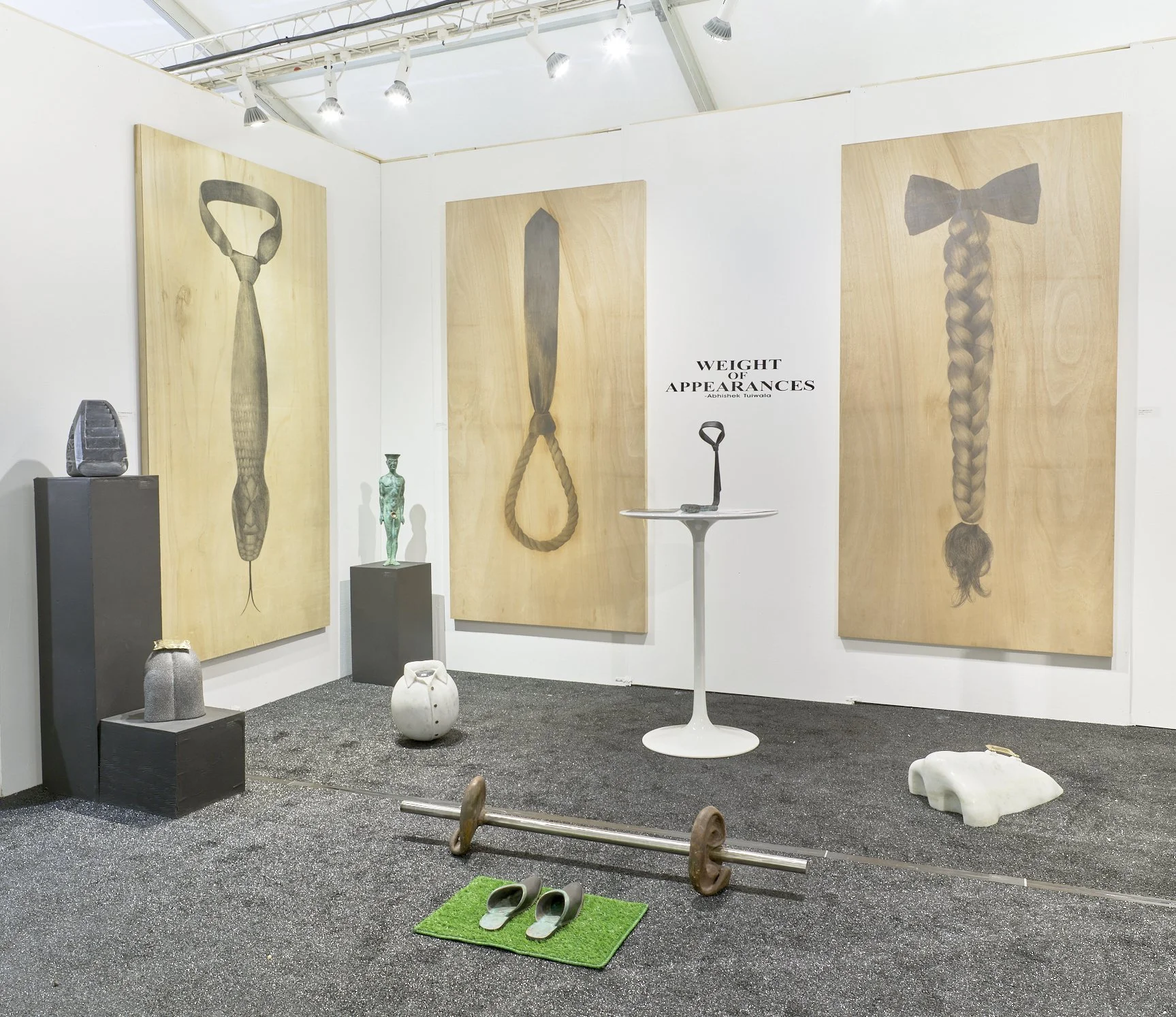
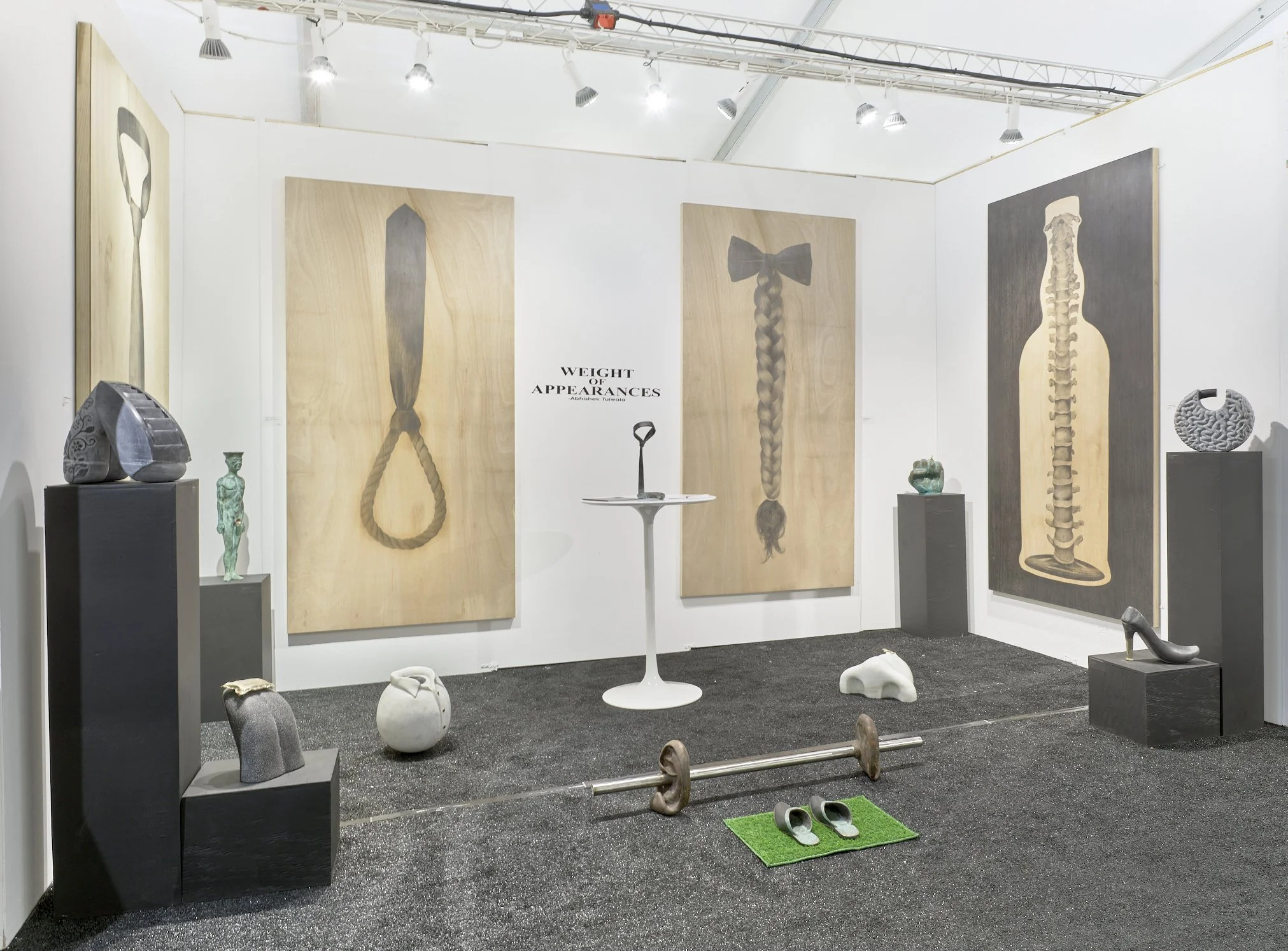
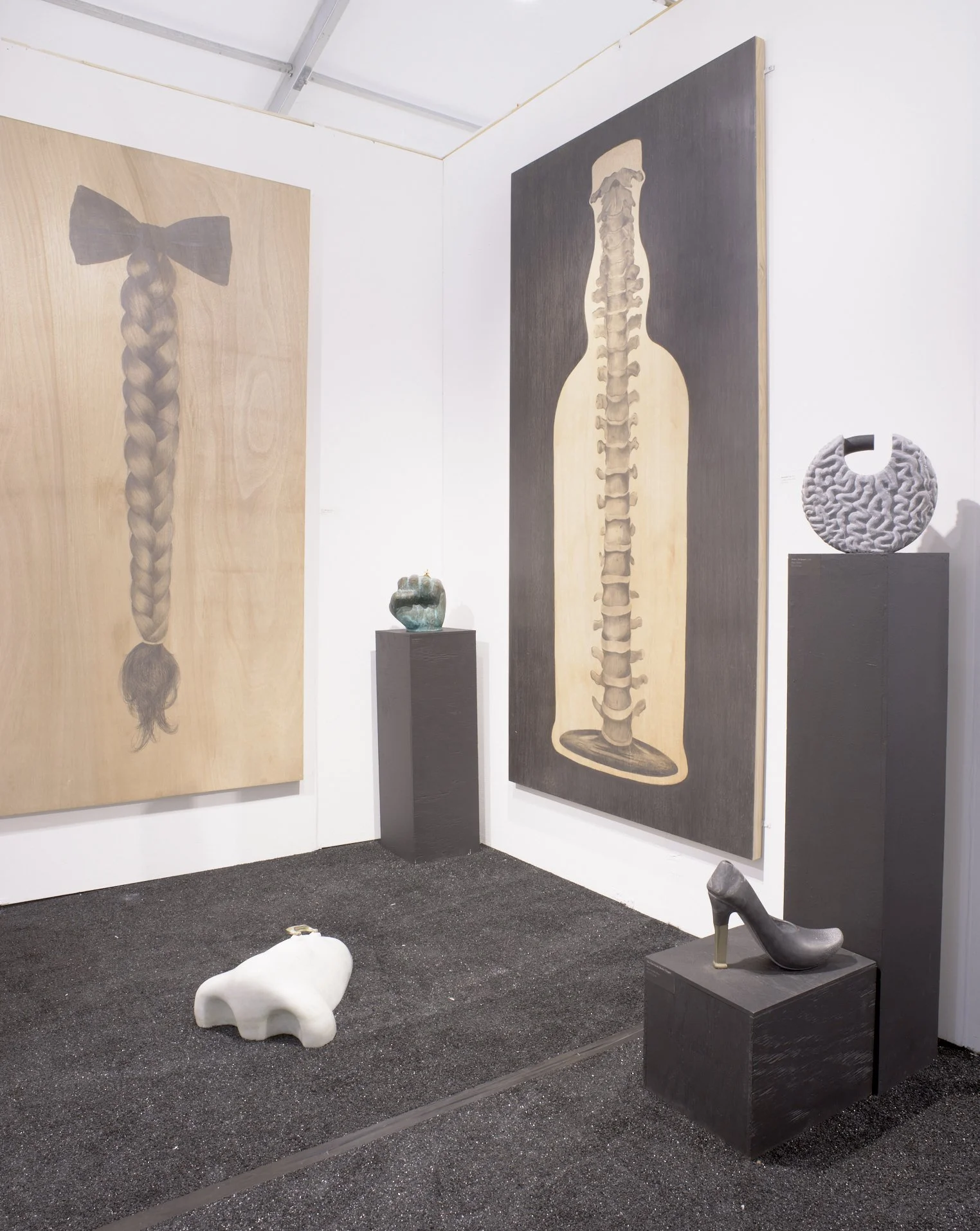
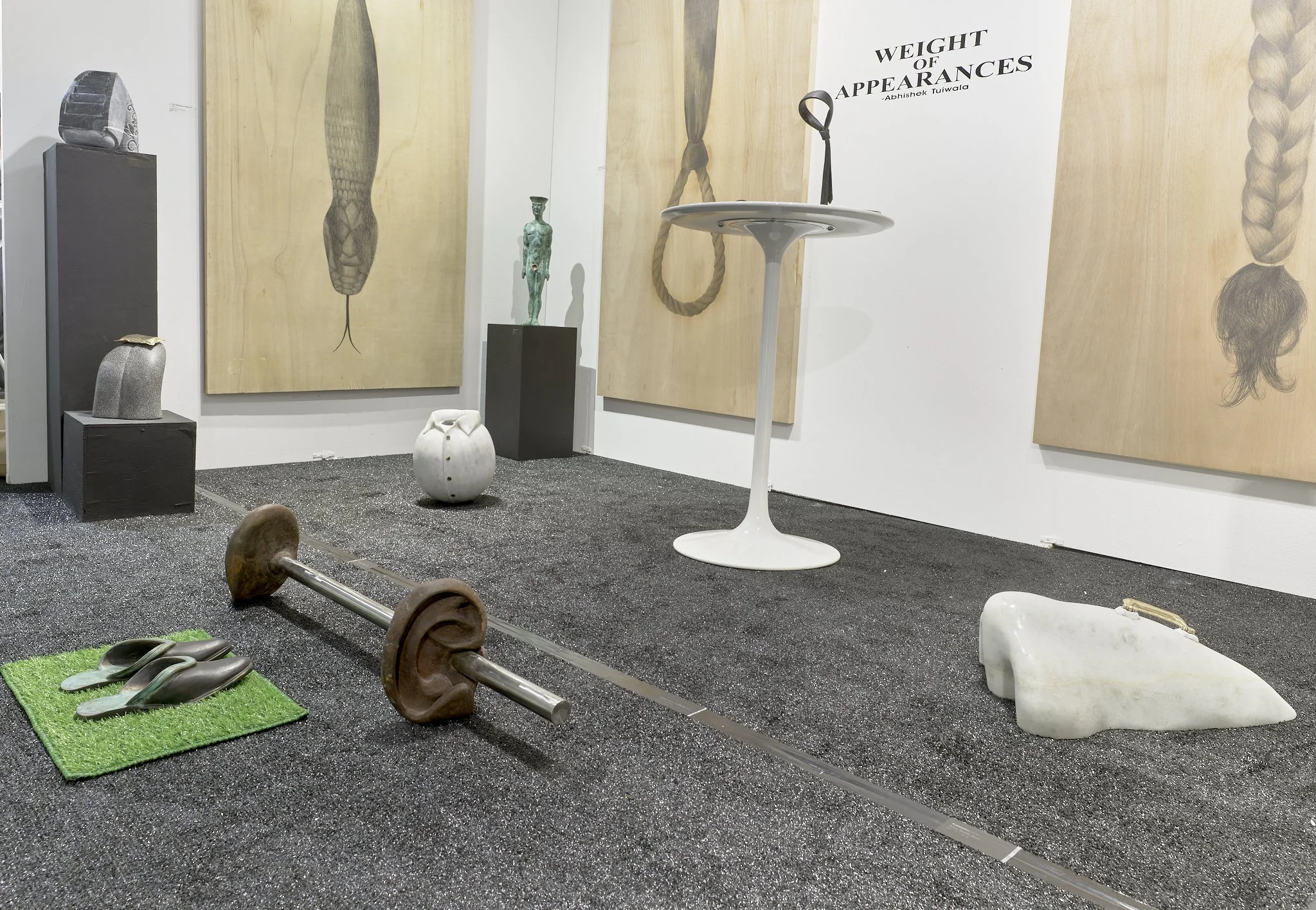
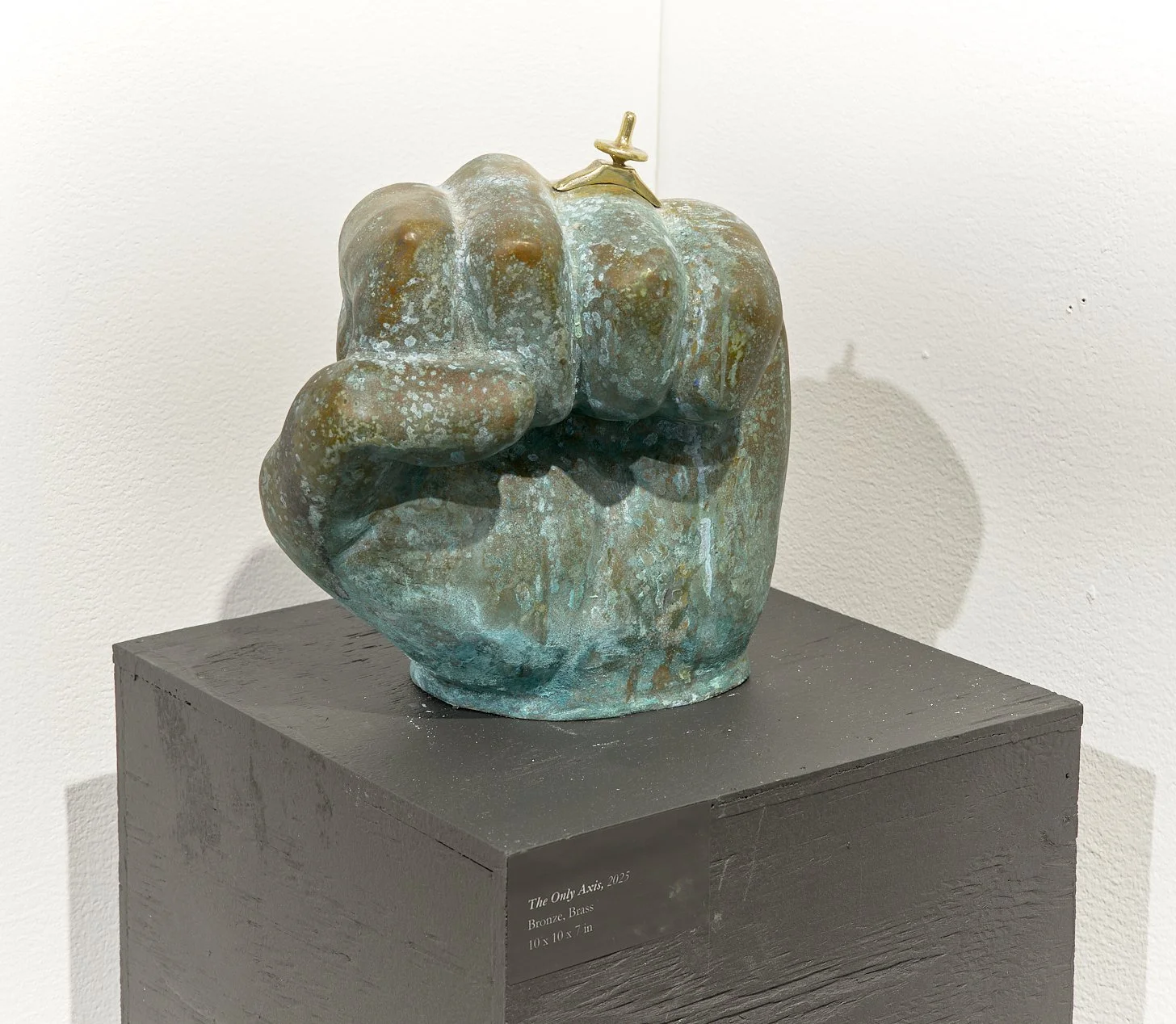
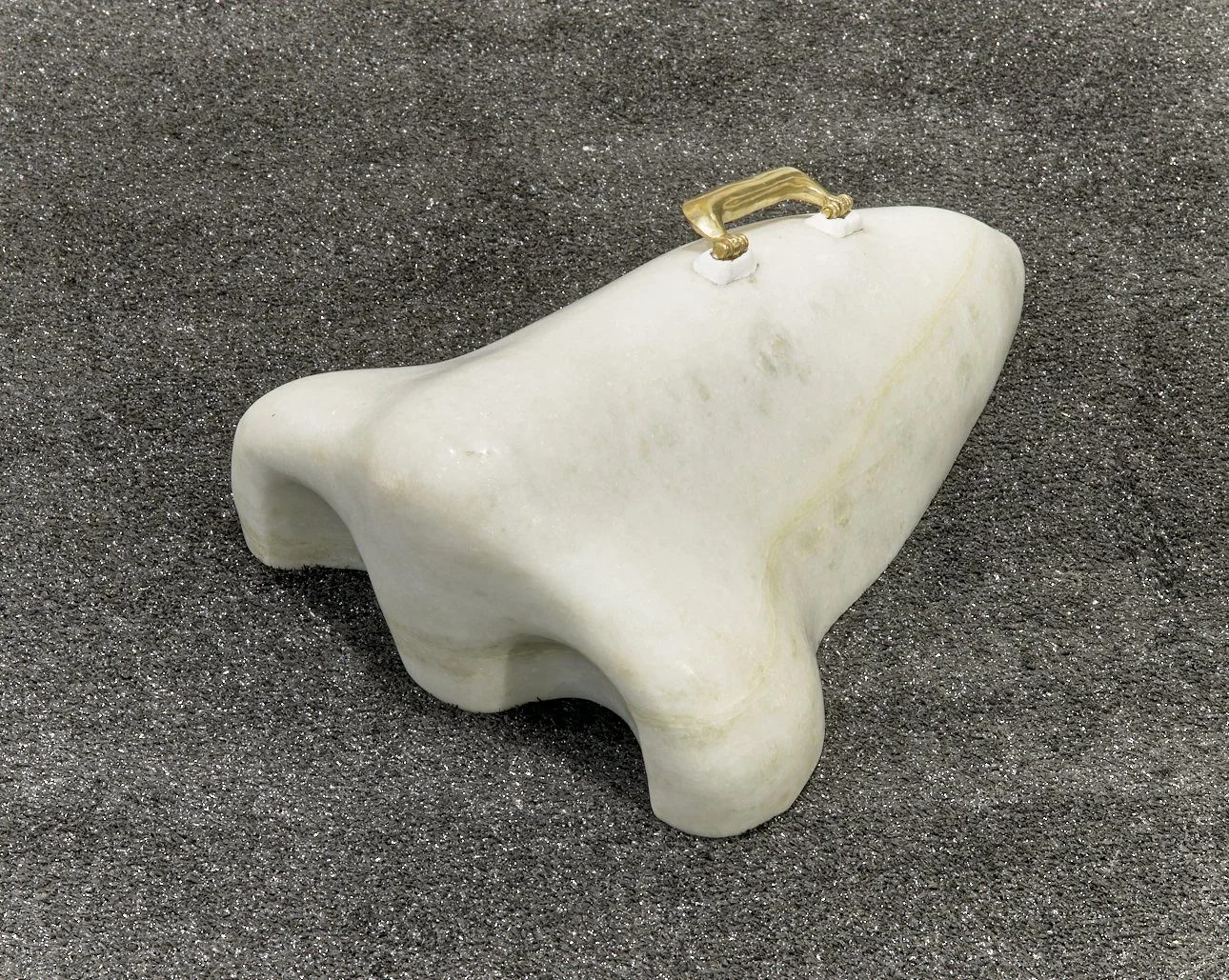
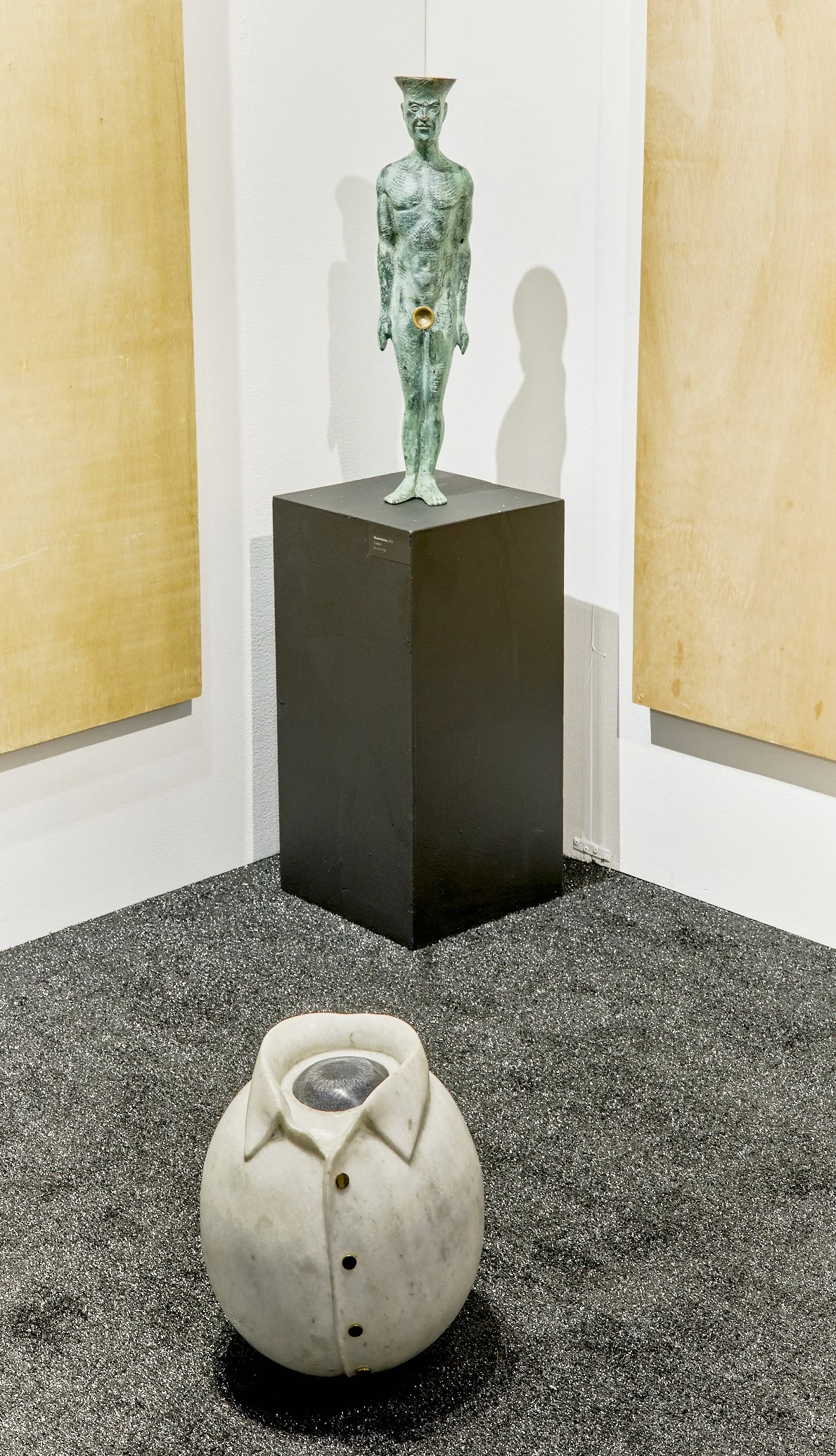
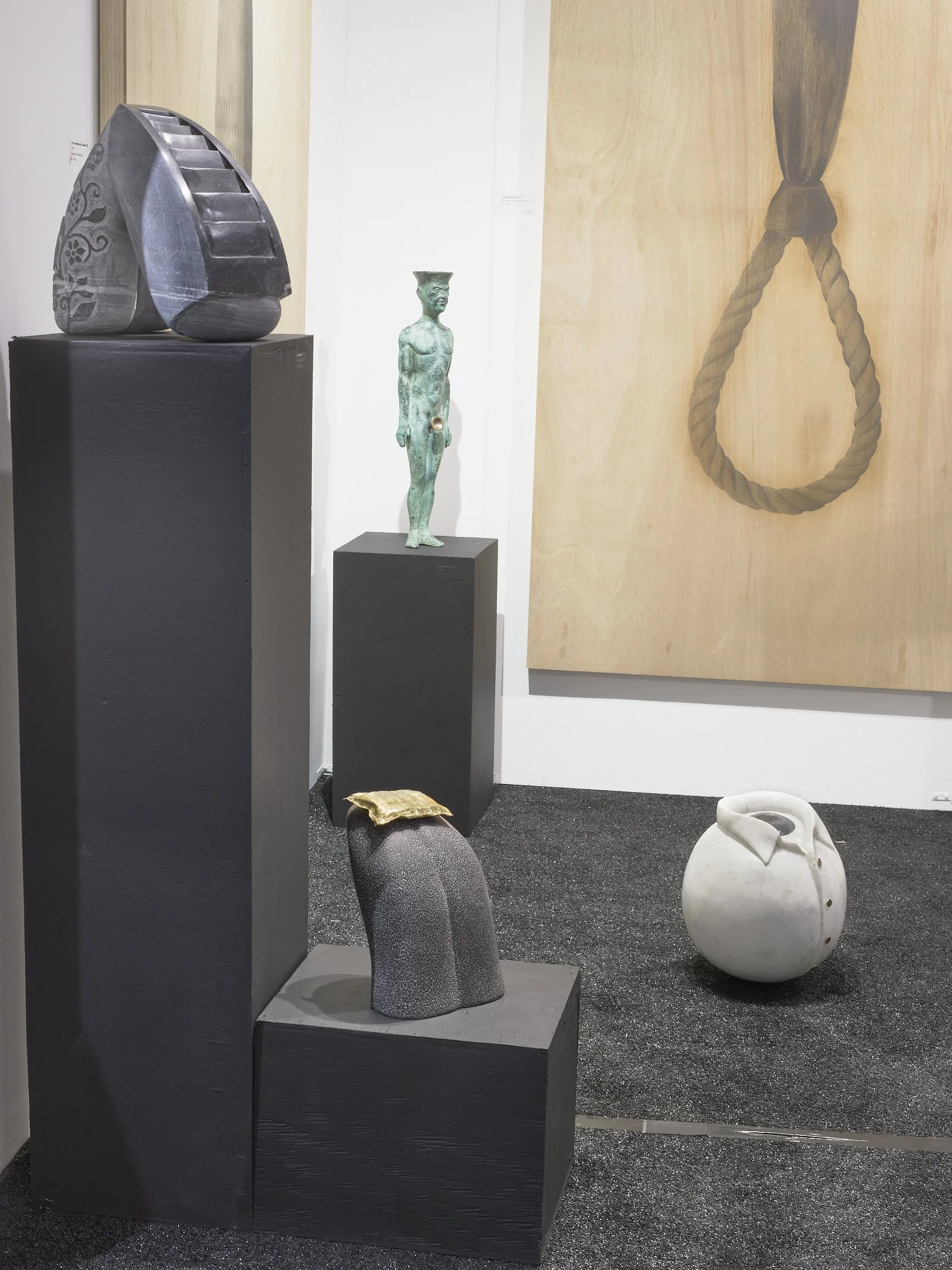
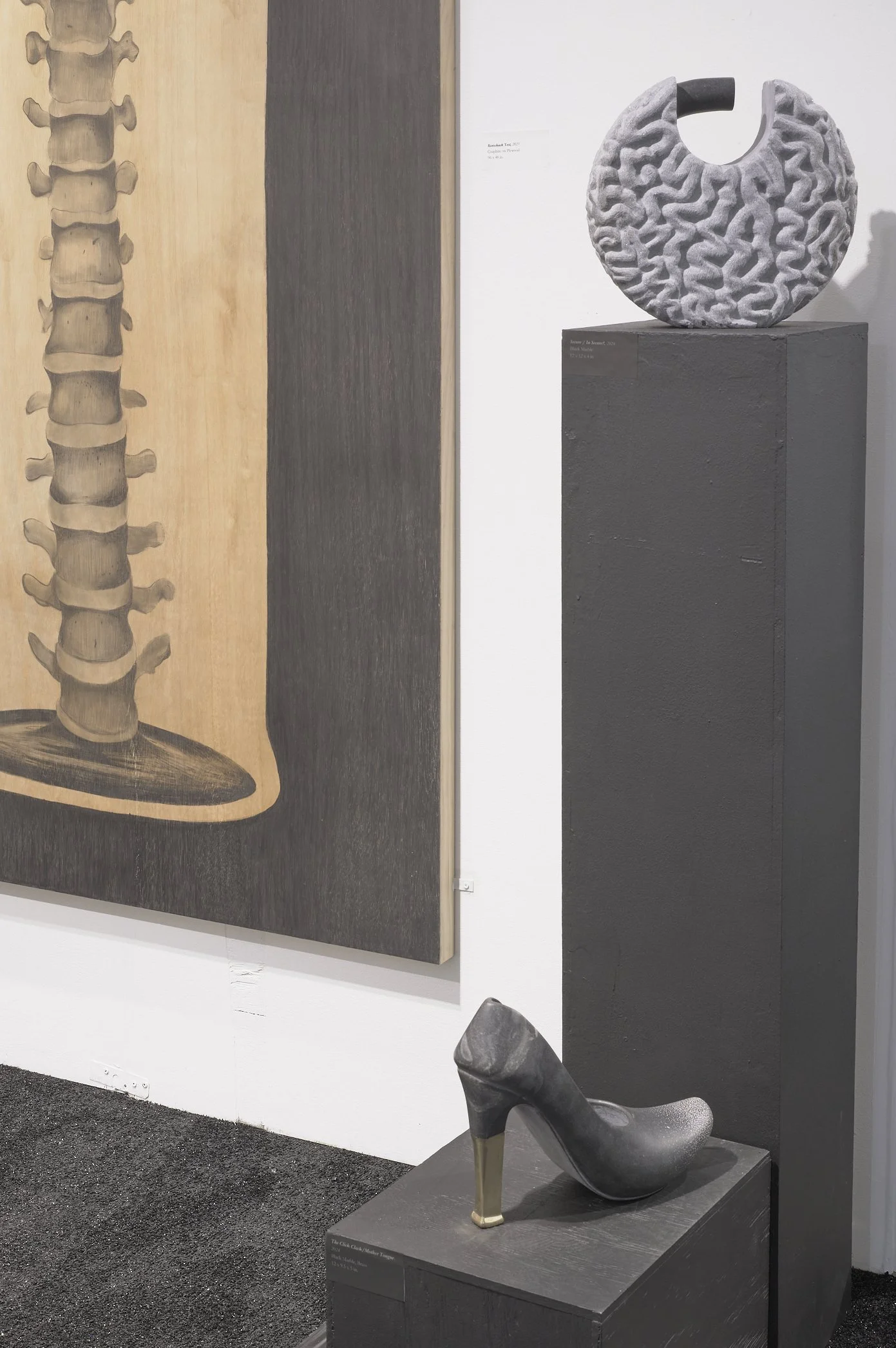
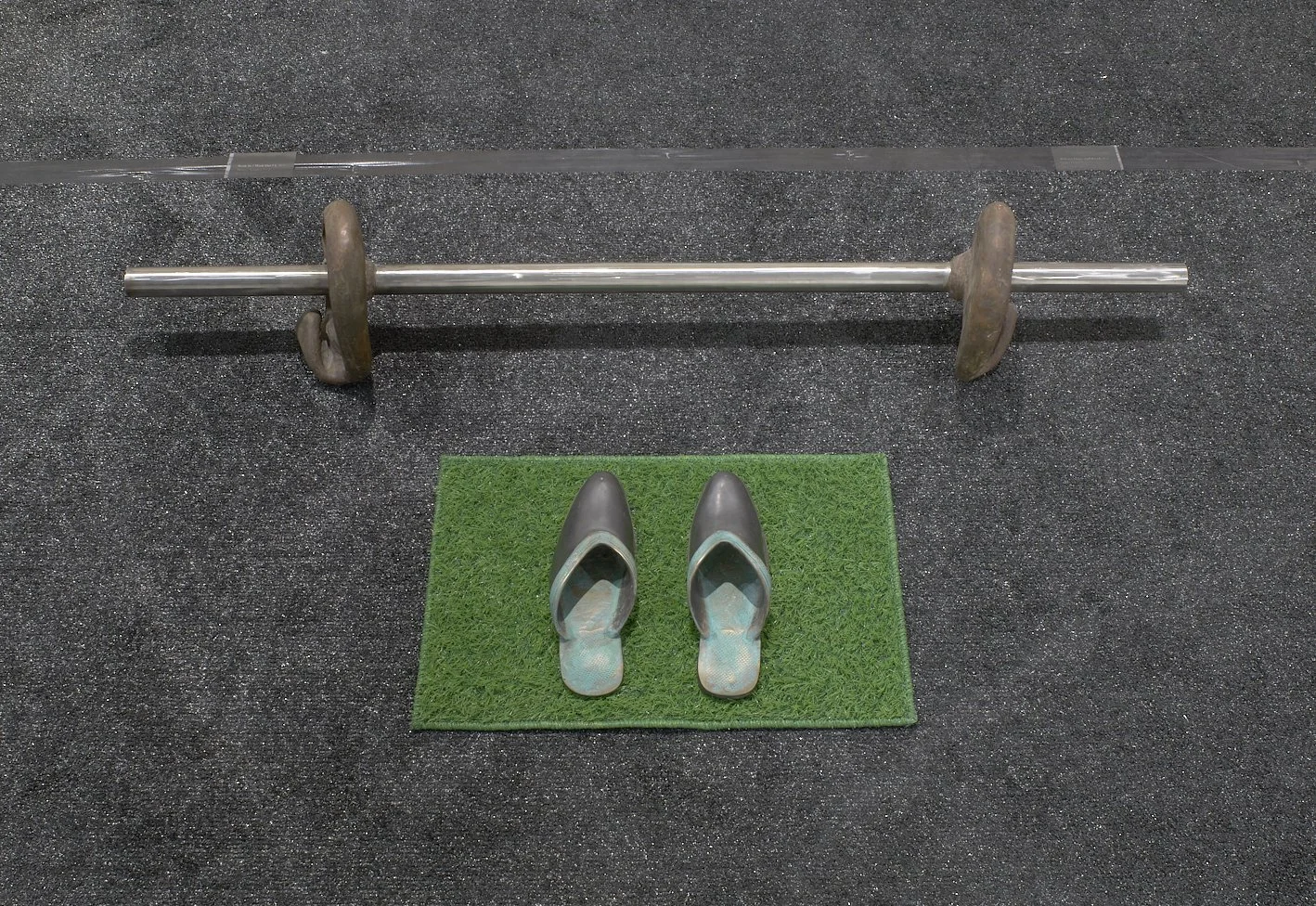
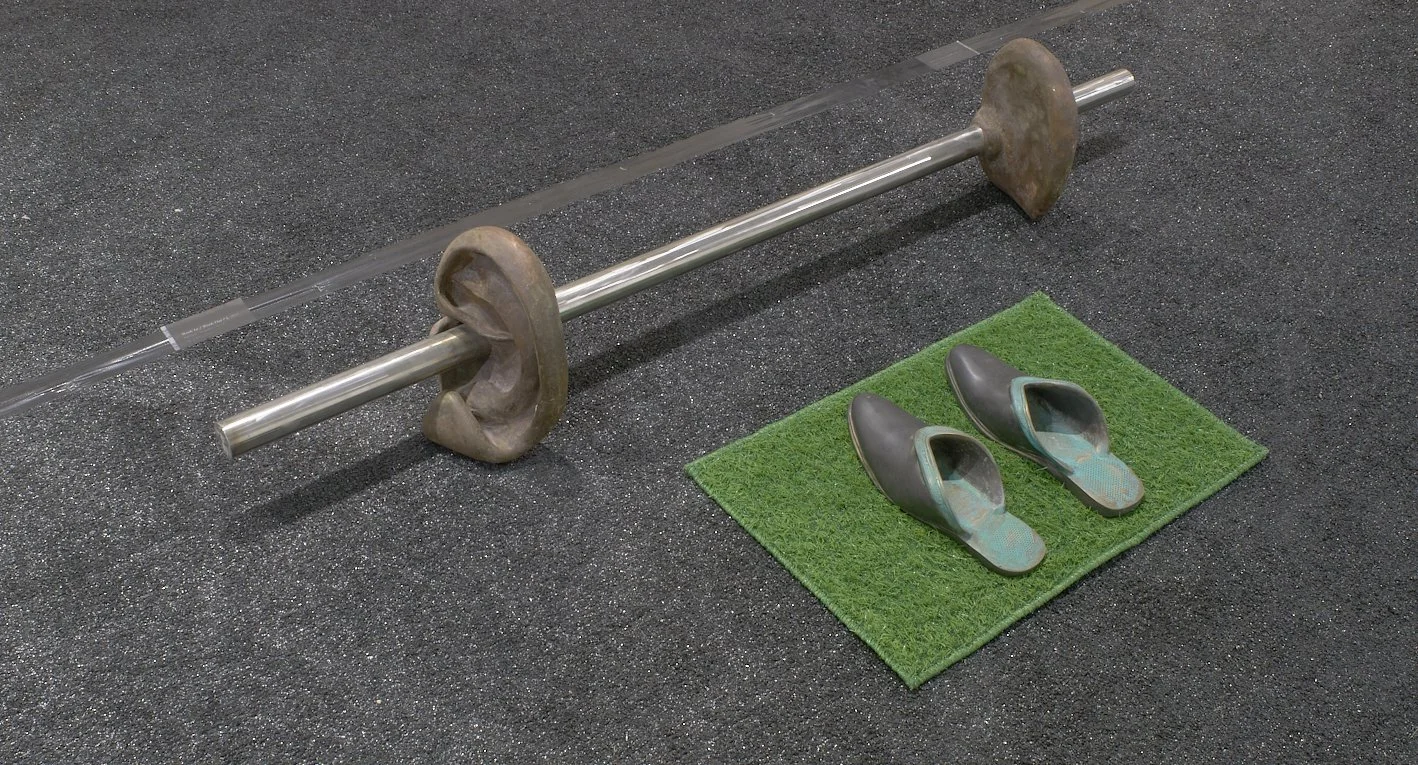
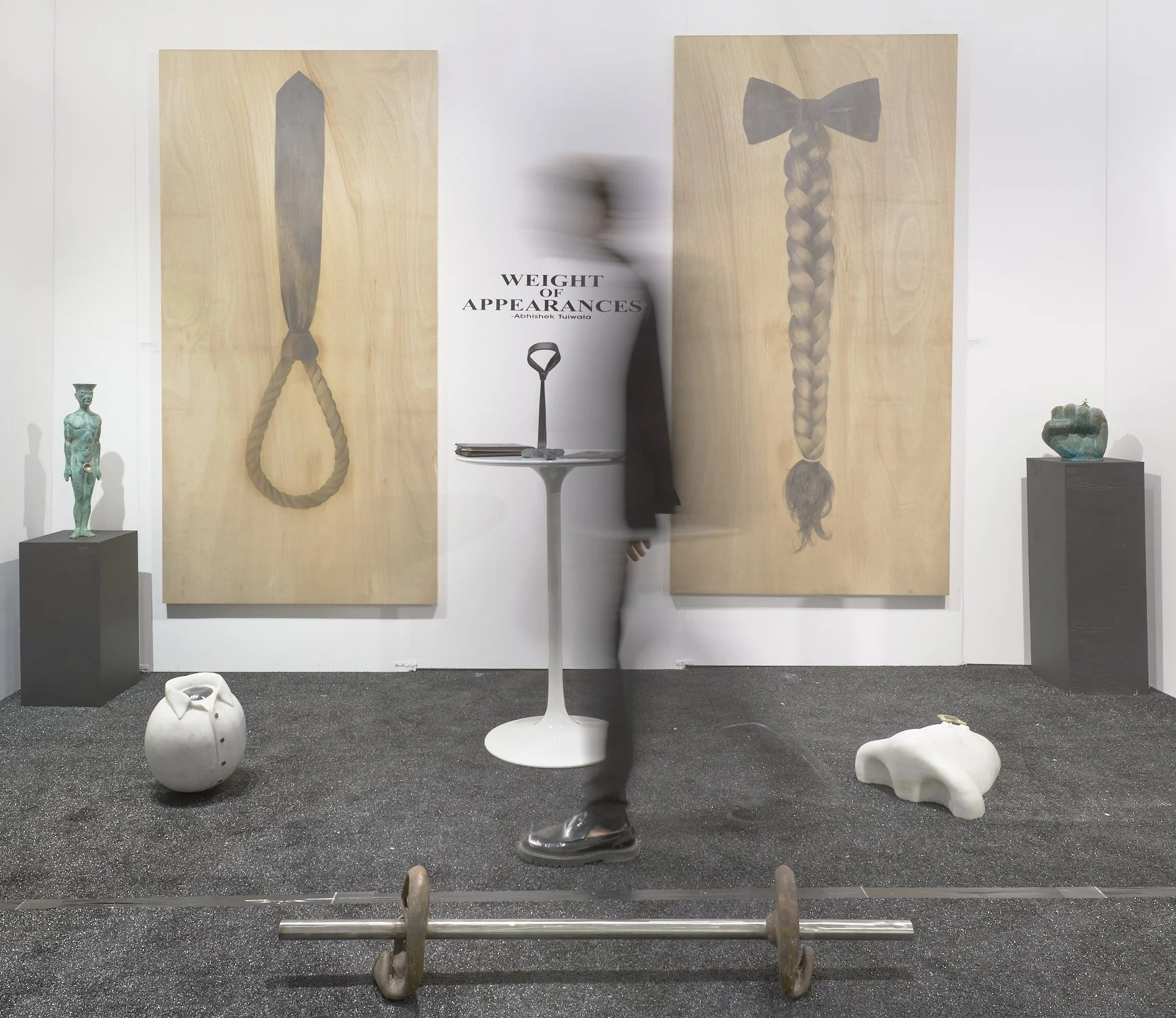
Weight of Appearances takes everyday objects as its starting point: a shoe, a necktie, a nose, a lock, an eye, a tongue. These are not neutral forms. Each one carries accumulated weight, cultural instruction about how to present, perform, and protect oneself within systems that reward appearance and punish deviance from it. By translating these objects into black marble, white marble, brass, and bronze, Tuiwala gives permanence to what is usually disposable, forcing a confrontation with what we ordinarily move through without pausing to examine.
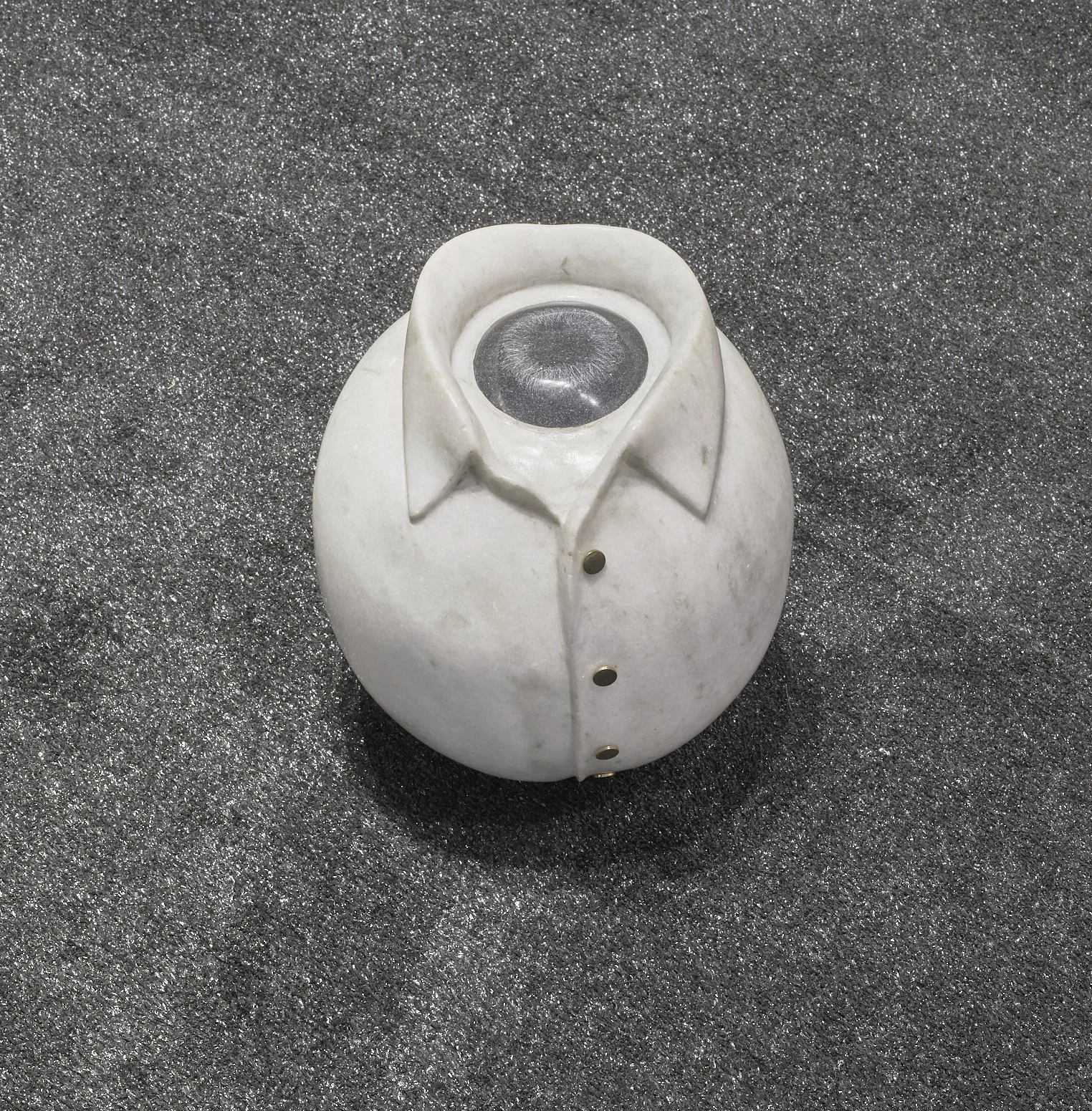
The materials are not incidental. Metal and stone carry weight, resistance, and permanence. They refuse casual handling. The Click Clack gives the sharp authority of a woman's stride a form that cannot be ignored. Reputation proposes that honor, in Indian culture symbolized by the nose, is not something kept at a distance but something carried everywhere, as fragile and as heavy as white marble. Father Tongue places a pillow of brass over a marble tongue, translating personal advice from father to son into a permanent act of restraint. Clothed Eye asks what prevents clear sight, and answers with a shirt collar, the uniform of social conformity, draped across the eye.
The large scale graphite drawings on plywood operate differently. The Corporate Leash and The Contemporary Charmer Ill move from the body to the systems that dress and direct it. A necktie becomes a noose. A necktie becomes a cobra. The drawings ask whether ambition and constraint, trust and exploitation, were ever really separate things.
Across all the works, the question is the same: what are we wearing, and what is it doing to us? Appearance is not superficial in this body of work. It is structural. It is how belonging is granted and withheld, how identity is performed and policed, how the cost of fitting in is absorbed into the body until it becomes invisible. These works do not resolve that question. They construct the conditions in which it can be felt.
PRESENTED BY
The Violet Theory Art Company and Invisible Punch
